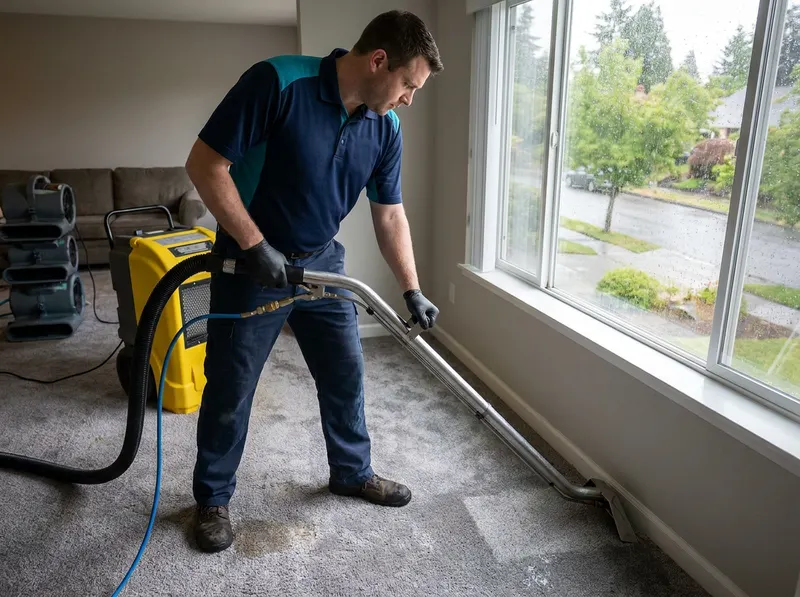
Emergency water extraction addresses standing water only, it is the removal phase, not the full dry-out. A truck-mounted extractor pulls hundreds of gallons per hour through a hose, while submersible pumps clear deeper water in basements and crawl spaces below Queen Anne, Magnolia, and the Ballard lowlands where clay-heavy soil and a high water table slow natural drainage. Seattle's older housing stock is a factor: many homes in Wallingford, Fremont, and the Central District sit on unfinished basements and cedar or Douglas-fir subfloors that wick water fast, so the sooner water is lifted, the fewer joists and sill plates absorb it.
Speed changes the outcome. Category 1 clean water (a burst supply line or overflowed fixture) can degrade to Category 2 gray water after roughly 48 hours, and drywall left in standing water usually wicks moisture up to 12, 24 inches within the first day. Extracting within the first few hours keeps hardwood flooring and lower drywall in the salvageable range more often; waiting past a day typically moves those materials into the cut-and-replace category. If the water is clean and confined to one room, extraction plus air movers is often enough; if it involves a sewage backup, a saturated basement, or has sat overnight, extraction is only the opening move before full structural drying and antimicrobial treatment.
The sequence runs in a fixed order. 1) The crew shuts the water source or confirms it is off. 2) Submersible pumps clear any water over about two inches deep. 3) The truck-mounted extractor pulls remaining water from carpet, pad, and hard flooring. 4) A moisture meter and thermal reading map how far water has traveled into walls and subfloor. 5) Air movers and a dehumidifier are staged so drying starts the same visit. Extraction that skips the moisture mapping step is the common cause of hidden mold behind baseboards weeks later.
A dumpster or hauling of ruined padding is not part of extraction pricing unless noted; the extraction quote covers water removal and initial equipment, and saturated materials removed are documented separately for the insurance claim. Seattle rain-driven intrusion, sump-pump failure during a November atmospheric river, or a clogged downspout flooding a Beacon Hill garden-level unit, is treated the same way: pump first, map moisture, then dry.