Water damage restoration in Seattle covers everything from pulling standing water out of a Ballard basement to drying framing behind a Capitol Hill wall after a supply line fails. A local water damage restoration crew reaches most Seattle addresses within 60 to 90 minutes of a call, because standing water saturates drywall in under 24 hours and mold can start on wet framing within 48 to 72 hours.

Water damage restoration in Seattle is the process of extracting standing water, drying the structure, removing damaged materials, and restoring a Seattle home or building to its pre-loss condition after a flood, burst pipe, sewer backup, or storm intrusion.
Every service reflects the same meticulous attention to detail, whether it's a single job or a larger water damage restoration project across Seattle.

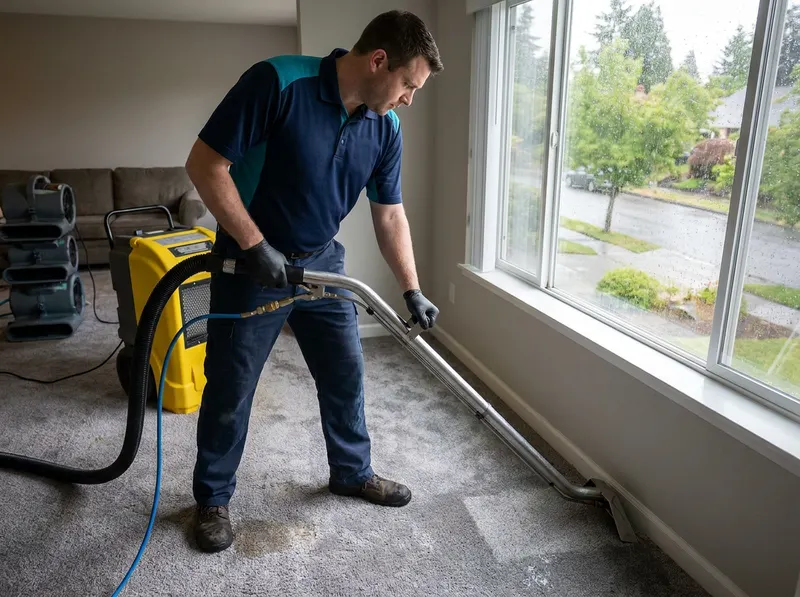
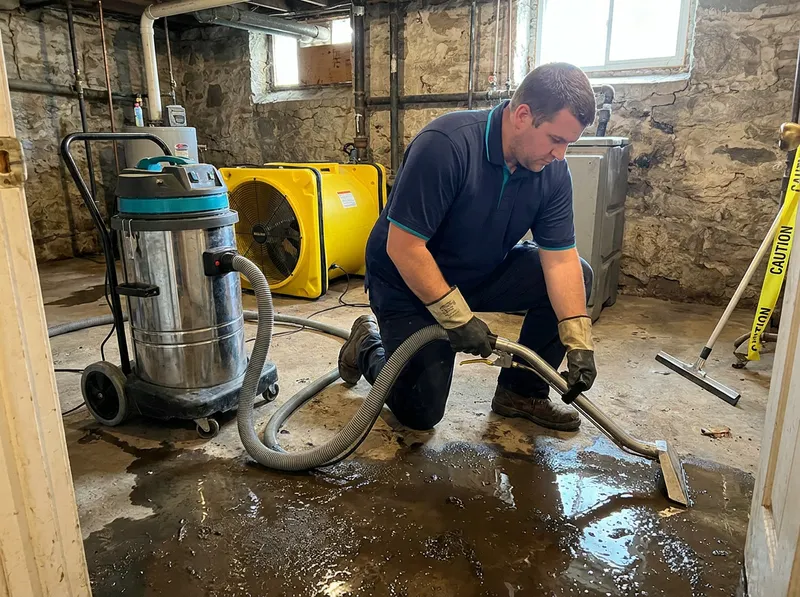
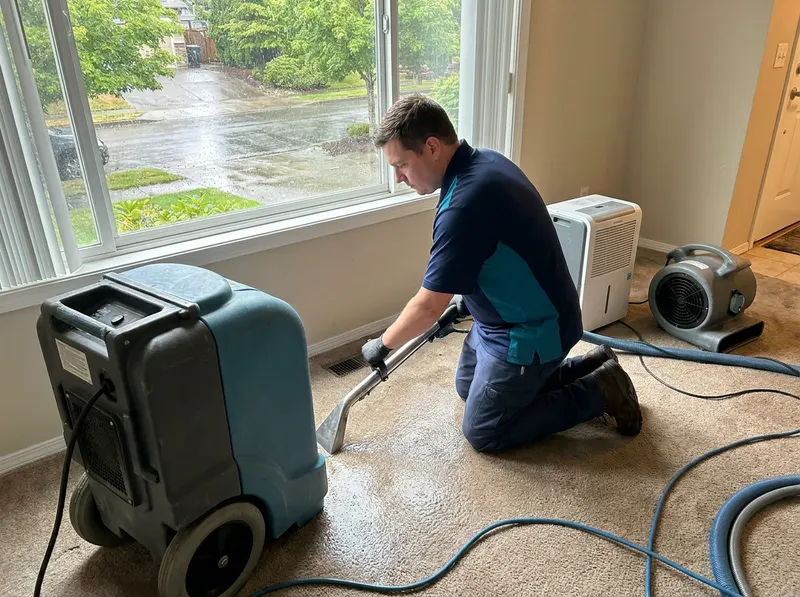
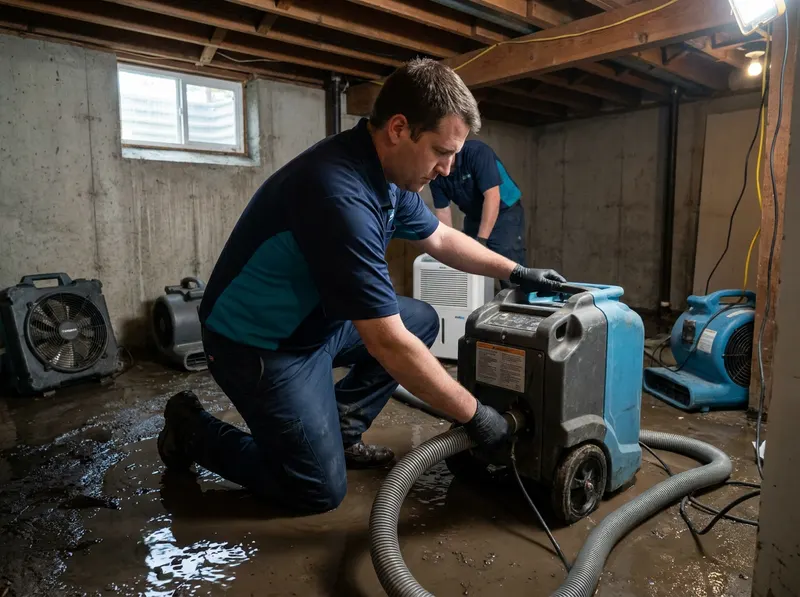
Same-day removal of standing water from flooded basements, ground floors, and crawl spaces using truck-mounted and portable extractors. A truck-mount pulls roughly 100 to 200 gallons per minute, far faster than a shop vac, which matters when a Seattle basement takes on several inches from a burst pipe or storm surge. Extraction runs 24 hours a day including nights and weekends, and starts the same visit the crew arrives so drywall has less time to wick water upward. The faster standing water is off the slab, the fewer materials cross the 48-to-72-hour mold threshold.
Get a quote →
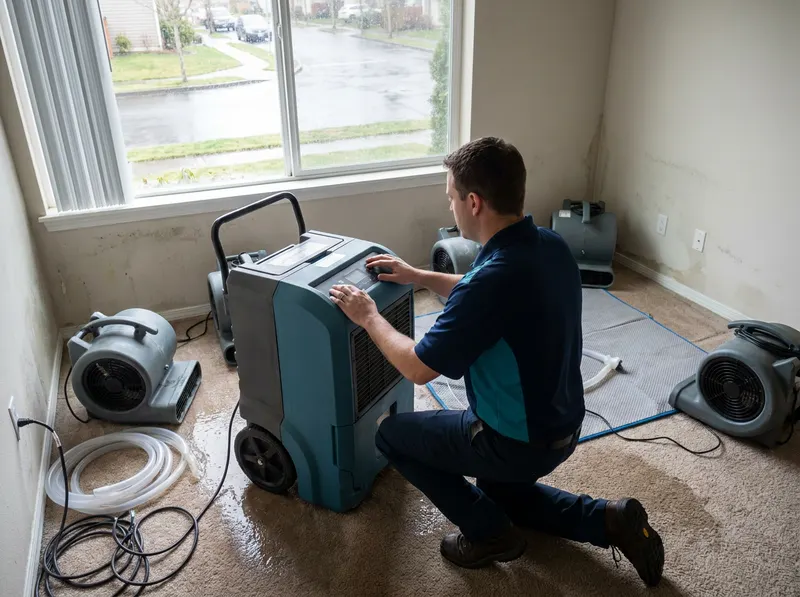
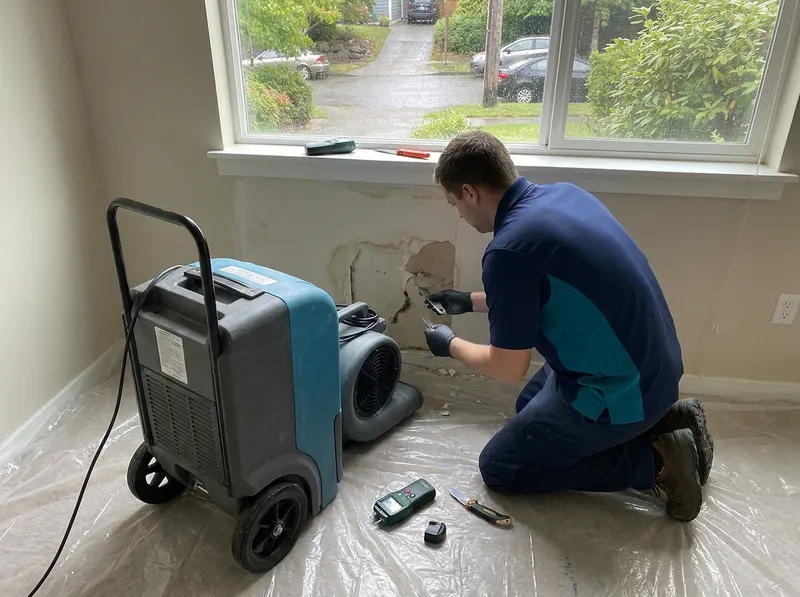
Placement of air movers and commercial dehumidifiers with daily moisture-meter monitoring until framing, subfloor, and drywall reach dry standard. Most single-room jobs dry in 3 to 5 days; a typical room runs 3 to 5 air movers and one large dehumidifier. Readings are logged each visit against a set dry target so the equipment comes out only when the wood and gypsum test dry, not on a guess. Drying-in-place saves the demolition and rebuild cost of a flood cut when the water was clean and caught early.
Get a quote →
Removal and disposal of contaminated black water from sewer backups and toilet overflows, followed by antimicrobial treatment. Porous materials touched by category 3 water, carpet, pad, saturated drywall, and insulation, are removed rather than dried, because contaminated water carries bacteria that cannot be safely dried back into a home. Sanitizing adds 1 to 2 days to the drying timeline. Crews wear containment gear and bag contaminated debris separately, since sewage disposal follows different handling rules than clean construction debris.
Get a quote →
Response to failed washing-machine hoses, ruptured supply lines, and frozen-pipe breaks common in older Seattle homes during a cold snap. A burst half-inch supply line can release several hundred gallons before the main is shut off. The crew extracts water, dries the cavity, and coordinates the leak repair so the wall can be closed once moisture readings clear. Catching a clean-water break within the first few hours often keeps the job to drying-in-place instead of a flood cut.
Get a quote →
Extraction and drying for below-grade spaces that flood during heavy Puget Sound rain, including crawl spaces where standing water sits against joists and vapor barrier. Pump-out, extraction, and directed airflow keep moisture from wicking up into the floor system above. Crawl spaces trap humidity because they rarely dry on their own in Seattle's climate, so mechanical dehumidification is set under the floor until the joists and subfloor test dry. Standing groundwater against untreated wood invites rot and mold if it is left to evaporate.
Get a quote →
Repair of stained, sagging, or bubbling ceilings and walls from roof leaks and upstairs plumbing failures. Wet insulation and drywall are removed where saturated, the cavity is dried and tested, then the surface is patched, textured, and painted to match. A brown ring on a ceiling means water has already passed through the drywall, so the cavity above is opened and dried rather than just repainted, which would trap moisture and let mold grow behind a fresh coat.
Get a quote →
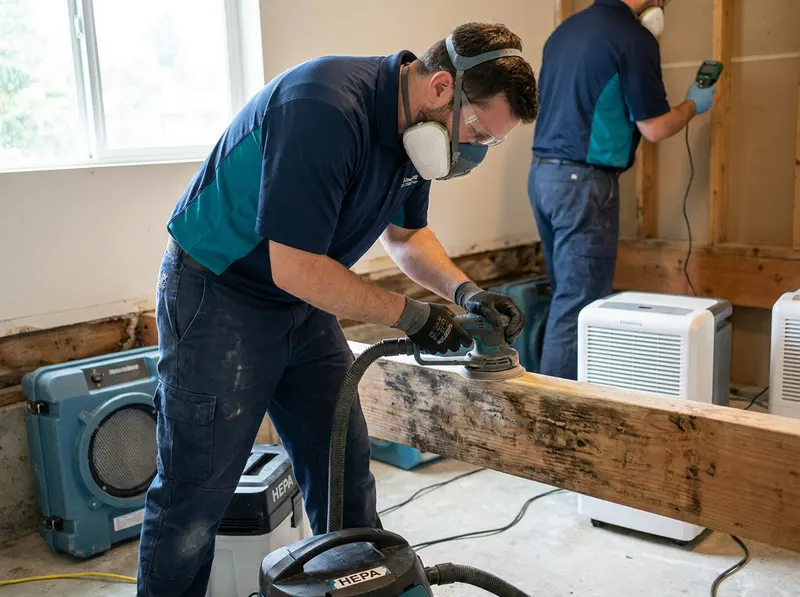
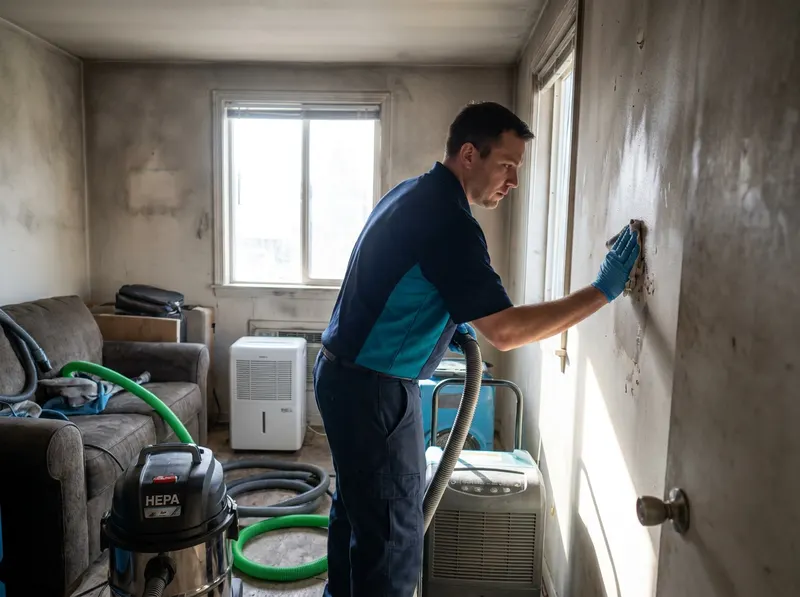
Containment, HEPA filtration, and removal of mold that follows undried water damage, sized to Seattle's damp maritime climate. Work areas are sealed with negative air pressure so spores are not spread through the home, affected porous materials are removed, and remaining surfaces are cleaned and treated so the framing tests clear before rebuild. Mold begins on wet drywall and framing within 48 to 72 hours, which is why a contained water loss dried the same day often avoids remediation entirely.
Get a quote →
Combined cleanup of soot, smoke odor, and the water used to extinguish a fire, since the two never occur separately. Charred materials are removed, surfaces are cleaned, odor is treated with thermal fogging or ozone as the situation calls for, and firefighting water is extracted and dried in the same visit. Handling the water and soot together prevents a second round of water damage from setting in while smoke cleanup is underway.
Get a quote →You get a firm, itemized quote for your water damage restoration before any work begins, no surprises, no pressure.
Careful prep, tidy work, and a full cleanup when we are done. We treat your home and belongings like our own.
The same trusted, background-checked team from the first call to the final check.
If the water is clean supply-line water caught within a few hours, choose targeted extraction and in-place structural drying, the crew dries the framing and subfloor without opening walls, which keeps the cost near the low end, often $1,200 to $2,500 for a single room. If the water sat overnight or wicked up more than 12 to 16 inches of drywall, choose flood-cut removal, where the saturated lower drywall and wet insulation come out before drying, the trade-off is added demolition and rebuild cost against a faster, mold-safe dry. If the loss involves sewage or a sewer backup (category 3), choose full removal and antimicrobial treatment of all porous materials rather than drying-in-place, because contaminated water cannot be safely dried back into the structure.
For fire and smoke events, choose the combined fire-and-water package, since firefighting water and soot must be handled together. For a below-grade space that floods repeatedly during Puget Sound rain, choose extraction paired with a crawl-space vapor barrier and drainage assessment rather than drying alone, because a space that took on groundwater once will take it on again. The rule of thumb: clean water caught fast favors drying-in-place; contaminated, overnight, or recurring water favors controlled removal.
Every project gets a firm, written price after a free on-site visit. Ranges below for orientation.
Tell us about your water damage restoration job and we'll send a clear, written quote, usually the same day. Or just call and talk to a real Seattle pro.
(425) 955-9633
Seattle's older housing stock, much of Ballard, Wallingford, and Beacon Hill was built before 1940 with unfinished basements and cast-iron or galvanized supply lines that corrode and fail with age. Heavy Puget Sound rain drains toward Lake Union and the Ship Canal, and low-lying or below-grade spaces in Fremont, Georgetown, and the Rainier Valley take on groundwater during a sustained storm rather than in a single burst. The region's damp maritime climate means indoor humidity rarely drops on its own, so a wet cavity that would air-dry in a drier climate needs mechanical dehumidification here to reach dry standard before mold sets in. Steep-lot homes in West Seattle, Magnolia, and Queen Anne send hillside runoff toward foundations, and daylight basements built into those slopes are the first to see water when a downspout overflows. Many pre-1990 homes across these neighborhoods still hold asbestos in vinyl flooring and joint compound, so a water loss that means cutting out saturated flooring often means testing first under Washington State rules. Sewer backups rise in older combined sewer lines during peak rain, which is why category 3 cleanup is a routine part of Seattle water work, not a rare one.
Free estimates for Seattle & the surrounding area.