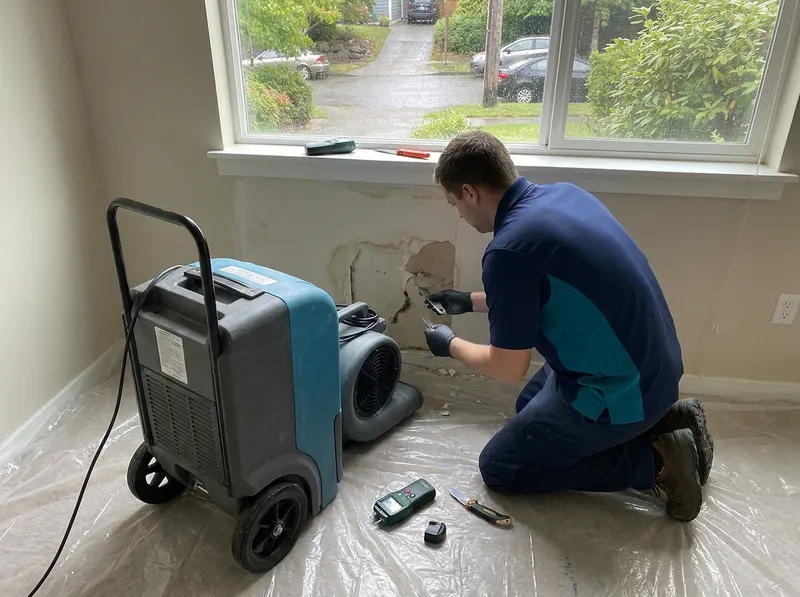
Ceiling and wall damage in Seattle homes most often traces to three sources: roof leaks during the October, March rain months, second-floor plumbing that drips into the ceiling below, and condensation behind exterior walls in older Ballard and Wallingford bungalows built with minimal insulation. A brown ring on a ceiling means water has passed through the drywall paper; a spongy or sagging section means the gypsum core is saturated and no longer structurally sound. Repair starts with a moisture meter reading, surfaces above 16% moisture are treated as wet and dried before any paint touches them, because sealing over damp drywall traps mold behind the finish.
The repair sequence runs in order: locate and confirm the leak source is stopped, read moisture across the affected area and 2, 3 feet beyond the visible stain, remove drywall that reads saturated or shows delamination, dry the exposed cavity and framing with air movers and a dehumidifier for 3, 5 days, verify a dry reading, then hang new drywall, tape, mud, texture-match, prime with a stain-blocking primer, and repaint. Older Seattle houses with lath-and-plaster ceilings, common in Capitol Hill and the Central District, take longer because plaster must cure before finish coats, and matching the original skip-trowel or knockdown texture adds a step.
A cosmetic stain and a structural repair are two different jobs, and the moisture reading decides which one applies. If a ceiling shows a dry, faint brown stain from an old roof leak that is now fixed, the fit is a stain-block primer and repaint, the surface stays in place, and the cost lands near the low end. If the drywall is soft, bulging, or has visible mold on the back, the fit is cut-out and replacement, because painted-over wet gypsum re-stains and eventually sags. Kitchen and bathroom ceilings under a leaking upstairs fixture almost always need cut-out, since supply-line water soaks fast and spreads along the joist bays.
A point homeowners often miss: the quoted repair range covers drywall and finish, but it does not include fixing the leak itself, a roofer or plumber stops the source first, and a soaked ceiling repaired before the leak is sealed will fail again. If mold covers more than about 10 square feet behind the drywall, Washington guidance calls for containment and specialized remediation, which is priced separately from cosmetic repair. Ceiling insulation soaked by a roof leak is removed and replaced rather than dried, because wet blown-in cellulose compacts and loses its R-value.